Chicken and Sausage Gumbo (a Tasty Cajun & Creole Mashup!)
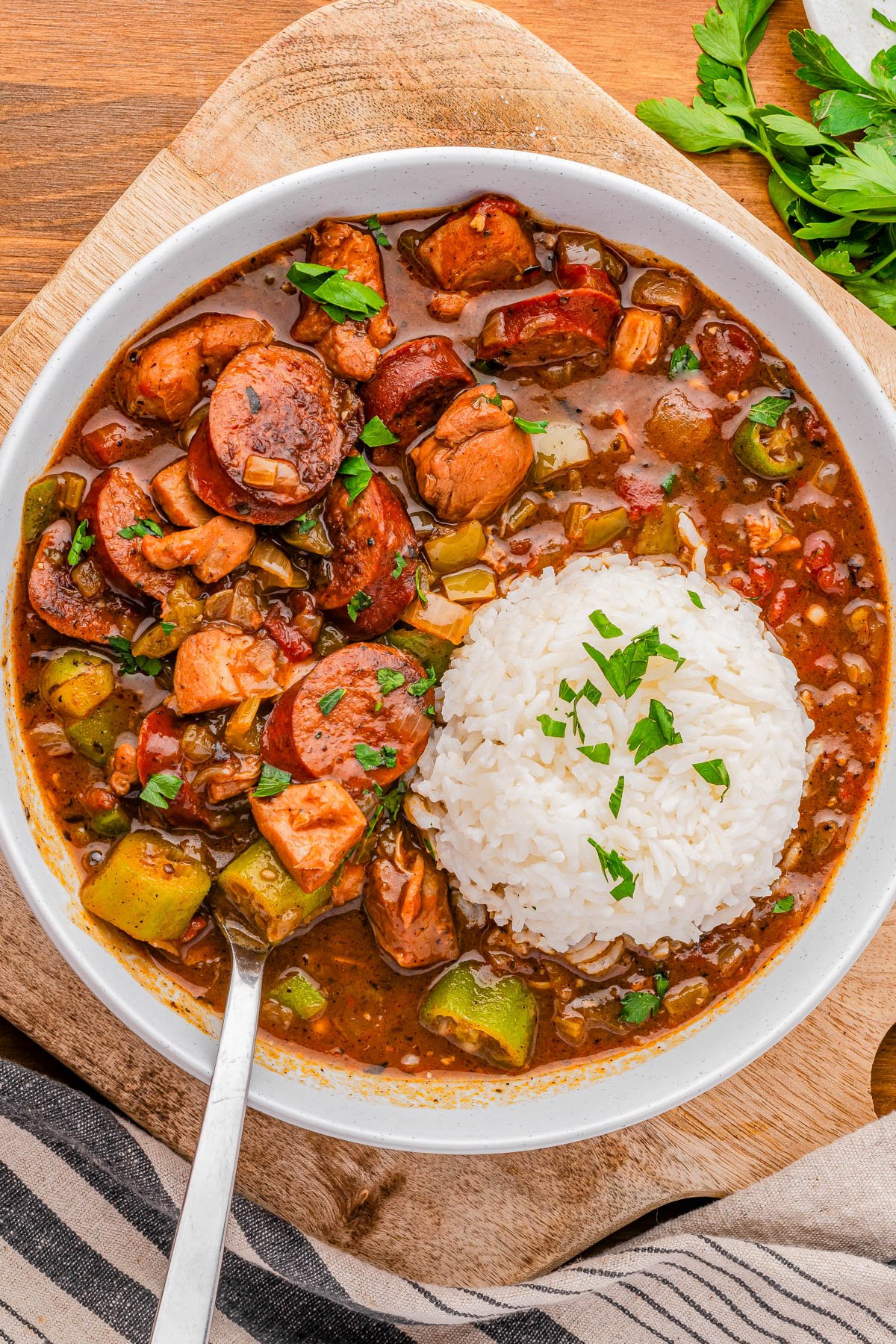
This Chicken and Sausage Gumbo 🥘 includes tender chicken, smoky Andouille sausage, and a richly spiced broth. This gumbo uses some traditional ingredients like bell peppers, onions, and celery while adding twists like fire-roasted tomatoes and jalapeños and for a kick! Served with rice, this gumbo is comfort food that sticks to your ribs and keeps you cozy from the inside-out!

Easy Chicken and Sausage Gumbo Recipe
- Gumbo is one of those recipes like jambalaya that everyone’s grandmother, friend or relative has “the best” gumbo recipe. Rather than compete with your family’s classic gumbo recipe, I’m shaking things up. If you like the sounds of that, keep reading. If not, go dust off your mama’s recipe box and grab her recipe for gumbo – I won’t be offended.
- Gumbo “debates” come down to one main thing, or so it seems: tomatoes, or lack of. It’s said that including tomatoes creates a Creole style gumbo and the lack of tomatoes means it’s a Cajun gumbo. I used fire-roasted tomatoes so not sure where exactly that leaves this version, but more in the Creole cooking camp I’d say.
- I also added jalapeños for a bit of extra heat, as well as some cayenne pepper. It’s said that spicier gumbos are Cajun and from Southern Louisiana whereas Creole gumbos are more characteristic of New Orleans. So again, I’m shaking things all up and not playing by granny’s rules.
- The final characteristic about gumbo that most people agree on is that it needs a dark roux for earthy flavor. Meaning, flour + fat has been cooked to a dark color, not just a golden brown colored roux like you’d create when making gravy. I’ve seen all kinds of ways to make a dark roux and some are very long and feel unnecessarily complicated (like baking roux). I make the dark roux for gumbo on the stove, while watching the heat so it doesn’t burn, and it doesn’t take long.
- The real magic happens when everything simmers together for about an hour. The flavors develop and marry and your house will smell so good!


Ingredients in Chicken and Andouille Sausage Gumbo
Andouille Sausage – This is spicy Cajun pork sausage and I use sausage that’s already been cooked. I sear it to develop the flavor. Use your favorite sausage with a heat level you enjoy, and that’s available in your area.
Chicken – I use boneless skinless chicken thighs (boneless skinless chicken breasts are fine) that I dice into small pieces and sear. Variations include roasting a whole chicken and shredding it, or use rotisserie chicken to save time.
Wondering about adding shrimp to make seafood gumbo? You can. Add them (cleaned and deveined with tails on, or off based on preference) in the literal last 5 minutes before you serve the best gumbo. Shrimp will cook very quickly in the hot broth and that’s all the time they’ll need.
Roux – Traditionalists will say that you need to use a fat with a higher smoking point such as vegetable oil because they also simmer a roux for 30+ minutes. Personally, I use salted butter and all-purpose flour without any issue provided you keep the heat on low or medium-low and whisk, whisk, whisk. When you have a dark brown roux like the one we do, it loses the ability to thicken like a lighter roux, and this chocolate roux is really about flavor, rather than thickening. We’ve got okra for that, see below.
Cajun Holy Trinity – Yellow onion (or sweet onions, white onions may be subbed), green bell peppers, and celery. This is based on a classic French mirepoix, but green bell peppers are used in place of carrots. You can also use half-and-half green bell peppers and red bell peppers.
Cajun Seasonings + Heat – Smoked paprika, jalapeño pepper, garlic, canned fire-roasted tomatoes, Worcestershire sauce bay leaves, dried thyme, dried oregano, cayenne pepper, salt, pepper.
Spice Tips: If you’re not a fan of spicy food, leave out jalapeno pepper and use regular canned diced tomatoes rather than fire-roasted. However, the spice level with the current proportions is nice; it has warmth and a bit of lingering heat. You can adjust the cayenne and add more jalapeños if you like really spicy gumbo. I would taste test it as you go and as the flavors develop depth and marry while cooking. You can always add hot sauce at the end to an individual bowl to customize things better.
Chicken broth – I use regular but reduced sodium is fine, noting you’ll need to add more salt than indicated.
Okra – The slimy vegetable! But in the case of gumbo, the slimy aspect acts as a thickening agent for the gumbo since our dark roux isn’t too helpful for thickening. You can use fresh or frozen okra. In California, I use frozen since we’re not really known as okra country. There’s also gumbo filé powder which is made from ground sassafras leaves and it’ll thicken things – almost too much thickening power – so if you’re using it instead of okra, add it sparingly, at the end, and keep stirring.
Garnishing and Serving – Fresh parsley is great and classic white rice is the way to go for gumbo and some skillet cornbread or honey cornbread muffins are a lovely touch.
Note: Scroll down to the recipe card section of the post for the ingredients with amounts included and for more complete directions.


How To Make Gumbo with Andouille Sausage and Chicken
- Browning: To a large, heavy-bottom, enameled cast iron Dutch oven (please use one so that your roux and gumbo turn out properly!), add the sausage and brown it on both side. Remove, set aside, add the chicken pieces, and sear briefly (do not cook through), remove, and set them aside too.
- Roux: Add the butter, allow it to melt over medium heat, then sprinkle the flour over the top, and whisk nearly constantly for about 5-10 minutes over low heat, or until the roux is dark brown in color, not tan. Tip – It’s better to go low and slow, so you don’t burn either the flour or the butter, so get control of the heat and make sure you’re not going too fast until the desired color is achieved. Add the smoked paprika and stir to bloom and combine.
- Cajun Holy Trinity: Add the aromatics including jalapeno pepper, garlic, onions, bell peppers, celery, and saute in the roux for about 5 minutes, or just until they’re beginning to soften.
- Liquids + Spices: Add the canned tomatoes and juice, broth, Worcestershire, bay leaves, remaining dried spices, salt, pepper, stir, bring to a low simmer.
- Combine + Simmer + Thicken: Add the sausage and chicken back in and allow the gumbo to simmer uncovered for about 50-60 minutes. Add more broth if necessary while simmering. In the last 15 minutes, add the okra (or gumbo file) to help thicken the gumbo.
- Taste + Garnish + Serve: Taste the gumbo and make any flavor tweaks that you like. Make sure to salt it sufficiently and if you want it hotter/spicier, add a bit more cayenne pepper. Remove the bay leaves, garnish with fresh parsley, green onions, or your favorite herbs. Serve with rice, cornbread, or as desired.
Note: Scroll down to the recipe card section of the post for step-by-step photos and process shots of the cooking process.


- 12 ounces Andouille pork sausage, sliced into thin rounds (I use previously cooked sausage so I’m just browning it, but you can use uncooked and then fully cook it)
- 1 ½ pounds boneless skinless chicken thighs, diced into small 1-inch pieces (boneless skinless chicken breasts may be substituted; or use previously cooked and shredded leftover chicken or from a rotisserie chicken)
- ½ cup butter, (I use salted butter but unsalted is fine, clarified butter or ghee is another option; vegetable oil may also be substituted rather than butter and the roux will take much longer to darken)
- ½ cup all-purpose flour
- 1 teaspoon smoked paprika, or to taste
- 2 cups yellow onion, diced small (sweet Vidalia is a good choice too; white onion may be substituted)
- 1 medium green bell pepper, seeded and diced small
- 2 celery ribs, diced small
- 1 small jalapeño, seeded and diced (omit if you want less heat)
- 4 cloves garlic, finely minced; or to taste
- 10 ounces canned diced fire-roasted tomatoes with juice, substitute with regular petite diced tomatoes f you want less heat
- 6 cups chicken broth, (I use regular, reduced sodium may be substituted and add more salt later; add additional broth as the gumbo simmers if desired based on your preferred thickness/broth level)
- 1 tablespoon Worcestershire sauce
- 2 bay leaves
- 1 teaspoon dried thyme, or to taste
- 1 teaspoon dried oregano, or to taste
- ¼ teaspoon cayenne pepper, or to taste (omit if you want less heat)
- 1 teaspoon salt, or to taste
- 1 teaspoon freshly ground black pepper, or to taste
- 1 cup sliced okra, fresh or frozen (thaw if using frozen)
- 2 tablespoons fresh parsley, chopped
-
Sausage: To a large 6 to 8-quart, heavy-bottomed, enameled, cast iron Dutch oven (or similar), add the sausage, and heat over medium-high heat to brown it. The sausage I use has already bee cooked so I’m not actually “cooking” it, just browning it to develop flavor. If your sausage is raw, you need to fully cook it now. When it’s done, remove it and set it aside. Tip – Andouille sausage (smoked pork sausage with a bit of heat) is traditional, but if unavailable, use another smoked sausage with a bit of spice.
-
Chicken: Don’t wipe out the pot from the sausage, just add the chicken (there’s likely enough leftover fat/grease from the sausage that you shouldn’t need to add any olive oil or cooking oil, but add a bit if you need to), and then brown the chicken for about 3-4 minutes total, flipping once or twice during that time. Remove it and set it aside with the sausage when it’s done.Tip – The chicken will continue to cook as the gumbo simmers for an hour later on, so be sure that it just browns now; you don’t need to cook it through fully. The pieces are small, so you don’t want to take the risk of over cooking and having tough chicken.
-
Butter: Reduce the heat to low, add the butter and allow it to melt, scrape up any brown bits and mix them in. It’s very important to keep the heat at low so nothing burns or you will have to start over!Notes – Some gumbo purists advocate using vegetable oil because it has a much higher smoking point than butter, so it’s less likely to burn, and there’s no dairy protein so you’re less likely to break/separate/burn the roux – for this reason using clarified butter or ghee is advantageous. You can use vegetable oil, noting that the roux will take much longer to come together, probably about 30-40 minutes, and you’ll be stirring nearly continuously.
-
Flour + Dark Roux: Sprinkle the flour over the butter and whisk constantly until the mixture turns a rich, dark, chocolate brown color, about 5 minutes if your heat is on low. But cook it as long as necessary to bring it to a dark chocolate color similar to Hershey’s Syrup, taking care not to burn it or you’ll have to start over! Do not leave it unattended and just keep whisking!If you’re using oil rather than butter, it may take 30ish minutes for a dark roux to fully develop; whisk nearly constantly. Notes – The dark roux is used to create a rich flavor for the gumbo and is much darker than the color roux you’d make for gravy.
- Add the smoked paprika and mix in.
- Vegetables: Add the onion, bell pepper, celery, jalapeño, and stir to allow the vegetables to become coated in the roux. Cook until beginning to soften, about 4-5 minutes; stir nearly continuously.
- Garlic: Add the garlic and stir constantly for 1 minute.
- Tomatoes: Add the can of tomatoes with the juice and stir to combine.
-
Liquids + Spices: While whisking slowly, add the chicken broth, Worcestershire, bay leaves, thyme, oregano, salt, pepper, cayenne, and stir to combine.Note regarding Spiciness – The spice level with the current proportions is nice. It has warmth and a bit of lingering heat. You can adjust the cayenne and add more jalapeños if you like really spicy gumbo. I would taste test it as you go and as the flavors develop while cooking.
- Reincorporate: Add the sausage and chicken back into the pot.
-
Simmer: Turn up the heat to medium and bring the mixture to a very gentle simmer, and then reduce the heat to low or medium-low, just so that the gumbo is very gently bubbling and allow it to simmer uncovered for 50-60 minutes, or as desired. Tips – The longer the gumbo simmers on a low temperature the more the flavors will develop and this is why leftovers taste even better – the flavors have married over time. If it gets too thick while simmering, add a splash more chicken broth to loosen up.
- Okra: In the last 15 minutes, add the okra which is known as a slimy vegetable but in this case, it thickens the gumbo and it’s important to not skip it since the dark roux does little to thicken the gumbo and is for flavor. There is also something called filé powder (French, and not common in most parts of the US) and you can add a little bit, very sparingly, at the end to thicken the gumbo but be careful because it can make it overly thick. My advice is to stick with okra unless you’re a gumbo expert.
- Taste: Remove the bay leaves, add the parsley, and make any necessary flavor tweaks, making sure to properly salt it. If it tastes at all flat, boring, bland, or dull, it likely needs more salt. Add more pepper, cayenne pepper, or other seasonings as desired.
- Serve: White rice is classic with gumbo, and cornbread or honey cornbread muffins are great.
Storage: Gumbo will keep airtight in the fridge for up to 5 days or in the freezer for up to 3-4 months. Reheat gently in the microwave or as desired. Gumbo actually tastes better the day after you make it because the flavors really developed and marry as time passes.
Serving: 1serving, Calories: 548cal, Carbohydrates: 21g, Protein: 35g, Fat: 36g, Saturated Fat: 16g, Polyunsaturated Fat: 4g, Monounsaturated Fat: 12g, Trans Fat: 1g, Cholesterol: 194mg, Sodium: 1959mg, Potassium: 711mg, Fiber: 3g, Sugar: 6g, Vitamin A: 1293IU, Vitamin C: 31mg, Calcium: 95mg, Iron: 3mg
Nutrition information is automatically calculated, so should only be used as an approximation.